
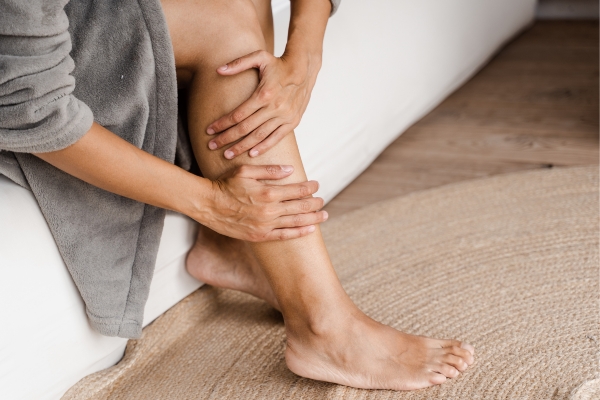
Are sore or restless legs making it hard to fall asleep? Whether you toss and turn or wake up in the middle of the night with painful cramps, these symptoms keep many patients with varicose veins from getting a good night’s rest.
Below, we explain why varicose veins can feel worse at night and how you can reduce leg pain, cramping and discomfort at bedtime.
What Are Varicose Veins and What the Symptoms?
Small valves inside your veins support circulation and help move blood back to the heart. Over time, factors like age, heredity, pregnancy and excess weight can weaken these valves, causing blood to pool in the legs and veins to enlarge.
The bulging, purple appearance of varicose veins is a common reason why patients seek treatment. However, the underlying changes also contribute to:
- Leg pain and cramping
- Itching, burning or tingling
- Heaviness or fatigue
- Swelling in the lower legs and ankles
- Leg tenderness
Why Do Varicose Veins Hurt More at Night?
By the end of the day, many people have already spent hours standing, sitting or otherwise putting strain on their circulatory systems. Lying on your back or stomach can make your leg discomfort more noticeable.
Changes in Circulation & Pressure
When vein valves are functioning properly, they work against gravity to return blood to the heart. If they malfunction, the valves cannot push blood upward, causing it to pool in your lower legs and increase pressure in the veins.
Varicose vein symptoms can become more noticeable once you settle into bed. As circulation shifts, you may experience:
- Increased pooling and pressure in the legs
- Throbbing or tenderness in the legs
- Difficulty getting comfortable
- Muscle cramping or twitching
Less Movement
Movement boosts circulation and helps minimize discomfort from varicose veins. Yet when you’re on the go all day, stopping to relax can exacerbate symptoms. Once in bed for the night, you may notice a heavy or constricted feeling in your legs or awaken hours later, startled by a cramp.
Restless Legs Syndrome
The circulation changes that cause varicose veins may also contribute to restless legs syndrome (RLS). For many people, it’s not unusual to experience both conditions or to confuse their symptoms at night.
While both can manifest as throbbing, pain or pins-and-needles in the lower extremities, those with RLS often have an uncontrollable urge to shake their legs after periods of inactivity. During the day, this can be expressed by jiggling a foot or periodic leg twitching. At night, RLS can disrupt sleep and reduce its quality.
How to Relieve Leg Discomfort at Night
A better night’s sleep starts with consistent habits that promote circulation throughout the day:
- Elevate Your Legs: To support the natural function of your circulatory system, raise your legs above your heart for at least 15 minutes a day.
- Stretching and Light Exercise: Aim for 30 minutes of yoga or another low-impact exercise that enhances blood flow and muscle strength.
- Compression Stockings: Wear these garments during the day to keep blood flowing and help reduce nighttime discomfort.
- Change Your Diet: Cut back on foods that cause your body to retain water and focus on staying hydrated. Include low-sodium, plant-based and potassium-rich foods in your diet.
- Follow a Routine: At night, take time to relax and decompress before lying down to sleep. Also consider deep breathing and meditation to relieve tension and stress.
- Improve Your Posture: Keep your shoulders back, stand up straight and sit with your feet flat to prevent blood from pooling in the lower legs.
- Don’t Sleep on Your Stomach: Try sleeping on your side, a position that reduces pressure placed on the body’s largest veins.
Seek Treatment for Varicose Veins
If varicose vein symptoms are making it harder to rest, Vein Centers of Connecticut can identify the cause and explore treatment options for lasting relief. Schedule your consultation today!